There are no items in your cart
Add More
Add More
| Item Details | Price | ||
|---|---|---|---|

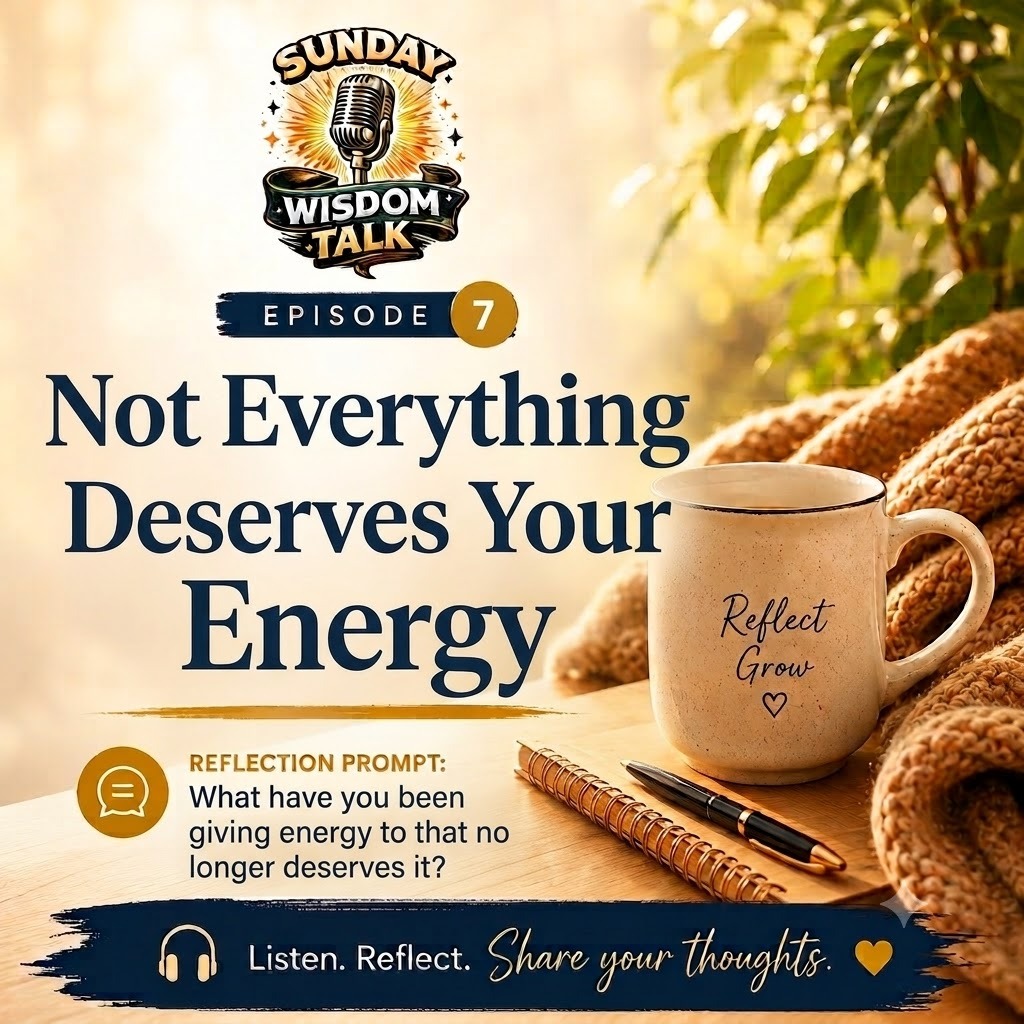
Most people don’t wake up one morning suddenly overwhelmed by life. It happens gradually. A notification here.
A difficult conversation there.
A headline.
A comment.
A responsibility.
Another demand for attention.
And little by little, energy begins leaking into places that were never meant to hold so much of it.
By the end of the day, many people feel emotionally exhausted without fully understanding why.
Not because they worked nonstop physically.
But because their attention has been pulled in too many directions for too long.
The Modern World Competes for Human Attention
Human attention has quietly become one of the most valuable commodities in modern life.
Entire industries are built around capturing it.
Phones vibrate.
Algorithms provoke reaction.
News cycles amplify urgency.
Social media rewards outrage, comparison, and emotional stimulation.
And while the human nervous system was designed to respond to occasional stress…it was never designed to process constant emotional input from hundreds of sources every single day.
The brain interprets emotional stimulation as information that may require action or protection.
Which means every upsetting post, tense interaction, unresolved message, or emotionally charged situation creates subtle physiological responses inside the body.
Heart rate shifts.
Muscles tighten slightly.
Stress hormones fluctuate.
Attention narrows.
Most of this happens automatically.
Quietly.
Below conscious awareness.
The Body Pays for What the Mind Holds
A woman scrolls through her phone before bed.
Nothing dramatic.
Just a few minutes to “unwind.”
But within those few minutes she absorbs:
• Someone else’s anger
• A tragic news story
• An argument in the comments
• A comparison she didn’t ask for
• A political debate
• A reminder of something she still hasn’t done
By the time she puts the phone down, her body is no longer where it was ten minutes earlier.
Her breathing is shallower.
Her mind is busier.
Her nervous system is more activated.
And yet from the outside, it looked like she was “relaxing.”
This is part of the challenge of modern overstimulation.
The body responds not only to physical demands…but to emotional and psychological input as well.
Why Humans Struggle to “Let Things Go”
The human brain is naturally wired to notice potential threats more than neutral experiences.
Neuroscientists sometimes refer to this as the negativity bias.
From an evolutionary perspective, this once helped humans survive.
The brain learned to prioritize what felt dangerous, uncertain, or emotionally charged.
But in modern life, this same mechanism can become exhausting.
A single critical comment may linger longer than ten kind ones.
One stressful interaction can replay in the mind for hours.
The nervous system keeps revisiting emotionally unresolved experiences as if continued focus might somehow create control.
But often…it only creates depletion.
Energy Is Not Infinite
One of the quietest forms of self-abandonment happens when people give emotional energy to everything equally.
Every opinion.
Every disagreement.
Every expectation.
Every invitation.
Every piece of information.
Every emotional pull.
But energy is not infinite.
Attention is not infinite.
And the nervous system pays a price when discernment disappears.
This is why two people can experience the same day very differently.
One person carries every interaction home internally.
The other knows how to release what was never theirs to hold.
The Difference Between Caring and Carrying
Many compassionate people confuse caring with carrying.
They believe that if something matters, they must emotionally absorb it fully.
But caring does not require internal collapse.
You can care deeply about people…
without taking responsibility for every emotion, conflict, or outcome around you.
You can be informed…without becoming consumed.
You can remain compassionate…without remaining constantly emotionally available to everything.
This is not coldness.
It is regulation.
It is wisdom.
And perhaps most importantly, it is sustainability.
The Nervous System Needs Boundaries Too
When most people think about boundaries, they think socially.
Saying no.
Limiting access.
Protecting time.
But the nervous system also requires energetic boundaries.
Not everything deserves immediate access to your mind.
Not every thought deserves prolonged attention.
Not every conflict deserves emotional residency inside your body.
This becomes especially important because the nervous system often struggles to distinguish between real immediate danger and repeated emotional stimulation.
The body reacts to both.
Which means constantly consuming conflict, outrage, tension, or overstimulation can keep the nervous system in a prolonged state of subtle activation.
Over time, this affects:
• Sleep
• Emotional resilience
• Digestion
• Focus
• Mood
• Hormonal balance
• Overall well-being
The body keeps score not only of trauma…but of accumulated tension.
Ancient Wisdom Quietly Understood This
Long before modern psychology existed, many spiritual traditions emphasized guarding the mind and spirit carefully.
Not from fear…but from understanding.
Because whatever repeatedly occupies attention eventually shapes internal experience.
What we repeatedly consume emotionally…we slowly become immersed within.
This is why environments matter.
Conversations matter.
Relationships matter.
What we watch, absorb, rehearse, and dwell upon matters.
Attention is not passive.
It is creative.
The Quiet Power of Discernment
One of the most transformative skills a person can develop is learning to pause before emotionally engaging.
Not every invitation requires participation.
Not every disagreement requires response.
Not every emotional wave requires immersion.
Sometimes the healthiest thing a person can say internally is:
This does not deserve my energy.
Not because it isn’t real.
Not because it doesn’t matter at all.
But because preserving internal peace is also meaningful.
And because chronic emotional overstimulation slowly disconnects people from themselves.
A Small Everyday Example
Someone sends a message that feels sharp.
Immediately the body reacts.
The chest tightens slightly.
Thoughts accelerate.
A response begins forming mentally.
Hours can disappear replaying the interaction internally.
Or…something different can happen.
A breath.
A pause.
A moment of awareness.
The realization that not every emotional spark deserves a fire.
And suddenly, instead of reacting automatically, the nervous system receives a different message:
We are safe enough not to engage this fully.
That moment may seem small.
But moments like that change physiology over time.
A Different Way to Protect Your Peace
Protecting your energy is not about becoming detached from life.
It’s about becoming more intentional with your attention.
More discerning with what enters your inner world.
More aware of what leaves you feeling expanded…and what leaves you depleted.
Because every day, consciously or unconsciously, people are deciding where their life force goes.
Toward conflict or clarity.
Toward overstimulation or presence.
Toward reaction or awareness.
And over time, those choices shape not only emotional health…but the felt experience of being alive.
Not everything deserves your emotional investment.
Not every situation deserves prolonged access to your nervous system.
And not every demand for your attention deserves your peace.
Sometimes wisdom is not found in doing more…but in learning what no longer deserves your energy.
Take a Moment to Embody This
Take a moment to pause with this reflection.
If you’d like to experience this reflection in a more guided way, you’re invited to listen. Listen to the audio reflection
If this reflection resonated with you, you’re invited to continue exploring more Sunday Wisdom Talks and restorative conversations inside the Reset Community — a space designed to support awareness, balance, and deeper connection in a world that constantly competes for your attention.
Written by Coach Lorraine Cuff
Sun, May 24th 2026.
 Launch your Graphy